December in the classroom already comes with plenty of excitement. Your classroom elf doesn’t need to add a giant mess—or another complicated job to your planning period.
The best Elf on the Shelf ideas for classrooms use supplies you already have, take just a few minutes to arrange, and give students something fun to discover when they arrive. Bonus points if that little visitor can introduce a reading activity, kindness challenge, or morning meeting prompt.
From a tiny reading corner to a silly pencil parade, these 25 ideas bring the fun without taking over your school day.
1. A Special Delivery from the North Pole

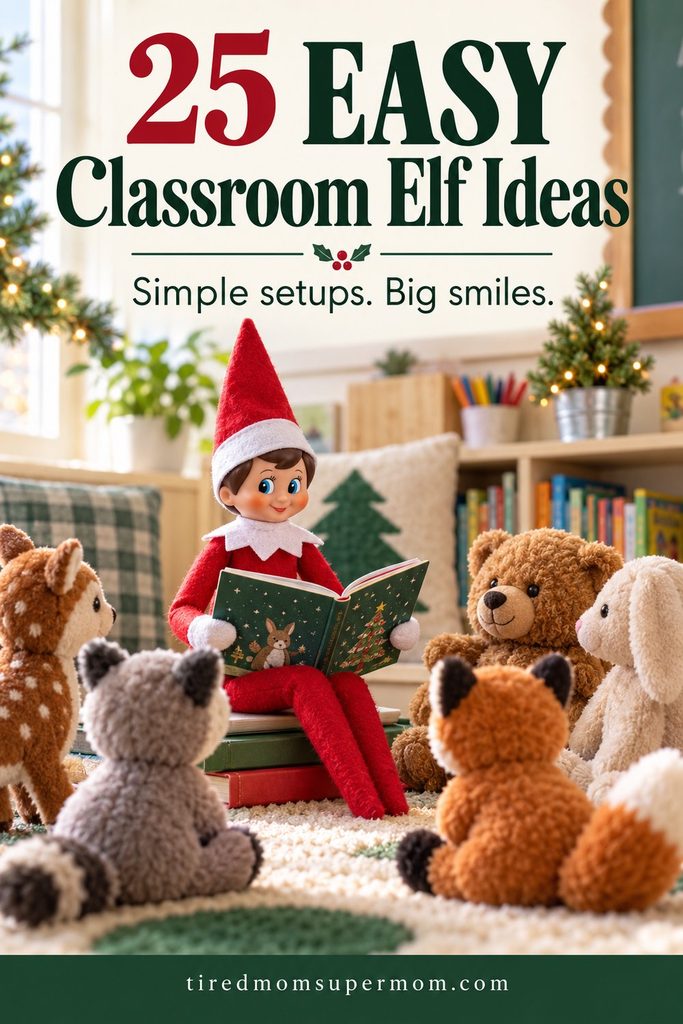
Place your elf in an open cardboard box with tissue paper and a handwritten delivery label addressed to your class.
Add a welcome note: “I heard this classroom was full of curious minds. May I join you for some December adventures?”
Set the box near your morning meeting area so everyone can see the new arrival.
2. Elf Reads to the Classroom Toys

Sit your elf in front of an open picture book and gather a few classroom stuffed animals around it.
A little sign saying “There’s always time for one more story!” finishes the scene. Leave a seasonal read-aloud beside the display to introduce the book you’ll share that day.
3. A Tangled-Up Teacher’s Helper

Loosely wrap the elf in a short strand of paper chain links and sit it on your desk.
Leave a note: “I tried to help decorate. Things got a little tangled!”
Use scrap paper for the chain, then invite students to make their own during a planned craft activity.
4. Elf’s Kindness Challenge
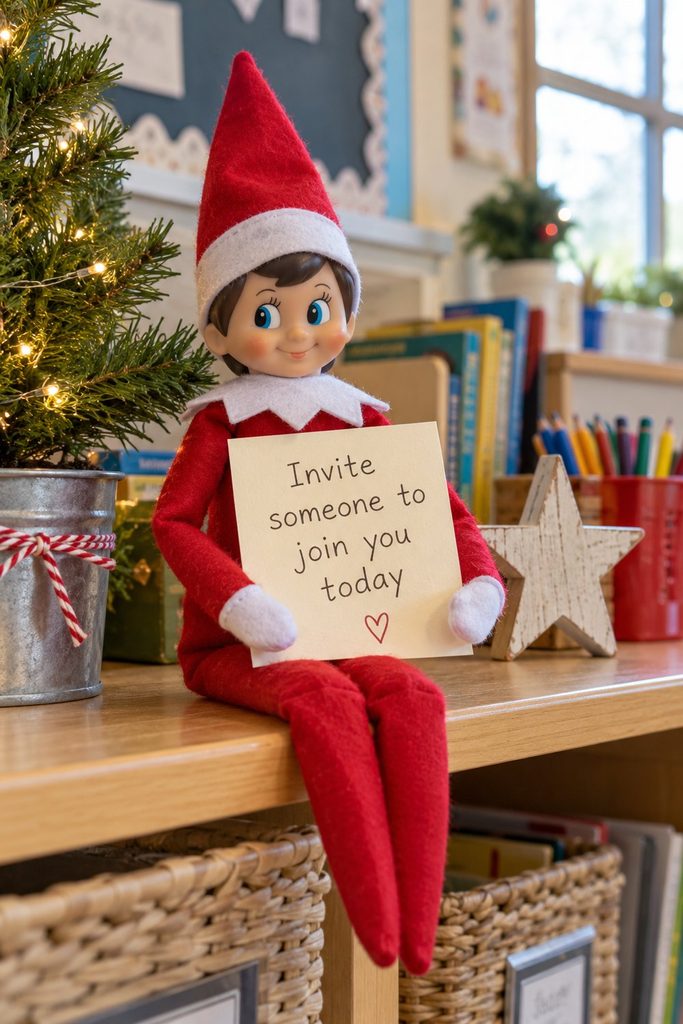
Have your elf hold a card with one simple classroom challenge:
“Today, invite someone to join you.”
Other options include thanking a helper, sharing supplies, or offering encouragement. Keep the challenge focused on something students can choose to do, without turning the elf into a behavior monitor.
5. Building-Block Hideout

Build a small shelter around your elf using classroom blocks.
Leave its face peeking through a window with a sign that reads “Trying out my engineering skills!”
For a learning connection, invite students to sketch a shelter they would build for a tiny visitor.
6. Gone Fishing for Paper Fish

Sit the elf beside a shallow tray of paper fish. Make a fishing rod from a craft stick and a short piece of yarn, with a paper fish attached to the end.
Write letters, numbers, or sight words on the fish if you want to reuse them in a small-group activity.
The elf’s note can say: “Look what I caught!”
7. A Very Small Art Show

Create a few tiny drawings on sticky notes and display them beside the elf.
Add a miniature sign: “North Pole Art Gallery.”
The drawings can be wonderfully imperfect: a snowman, a lopsided tree, or a portrait of the elf. Use the scene as a prompt for students to create and title their own small artworks.
8. Elf Takes Attendance
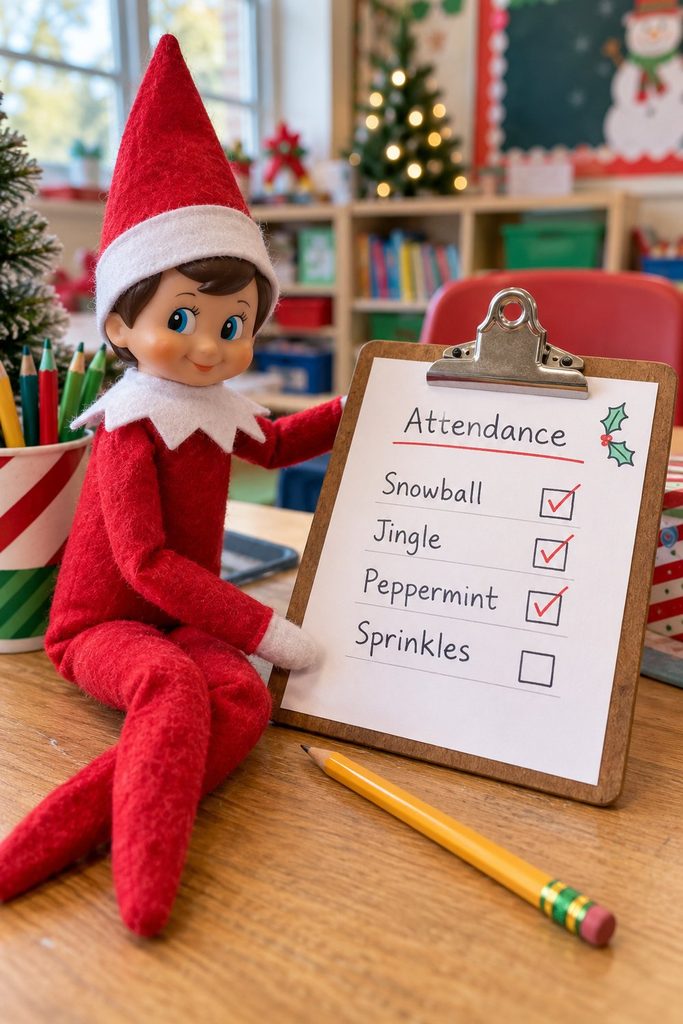
Place your elf beside a pretend class list filled with names such as Snowball, Jingle, Peppermint, and Sprinkles.
Add a note: “I think I brought the wrong attendance sheet!”
Keep real student records tucked away. The made-up names are what make this setup funny.
9. Paper Snowflake Surprise

Arrange a few paper snowflakes around the elf on a shelf or display table.
Leave a folded paper square beside it with the message “I’ve been practicing!”
This is an easy introduction to a snowflake craft. Younger students can decorate precut shapes instead of cutting folded paper.
10. Elf’s Pencil Parade
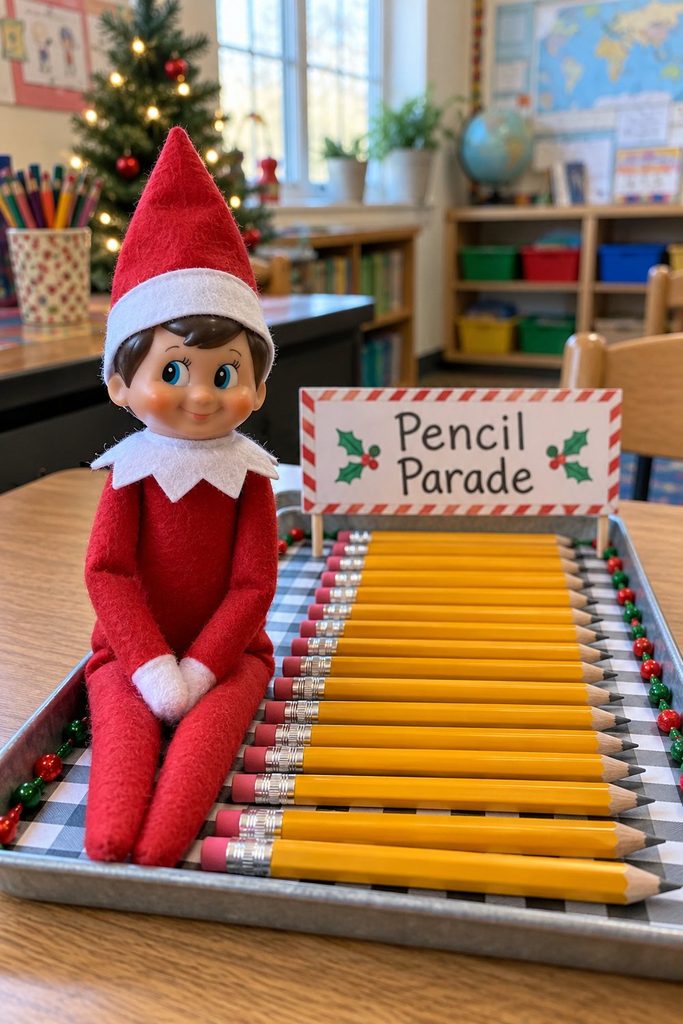
Line up a handful of pencils in neat rows with the elf sitting at the front.
Add a sign: “Pencil parade! Next stop: writing time.”
Set this up on a tray using spare pencils so students can still access their regular supplies.
11. Snowball Toss Practice

Make a few “snowballs” from crumpled scrap paper. Sit the elf beside them with a paper cup positioned as a target.
A note can read: “My aim needs work!”
If you turn it into a classroom activity, use a designated space and have students count successful throws.
12. Elf Gets Caught Reading Upside Down
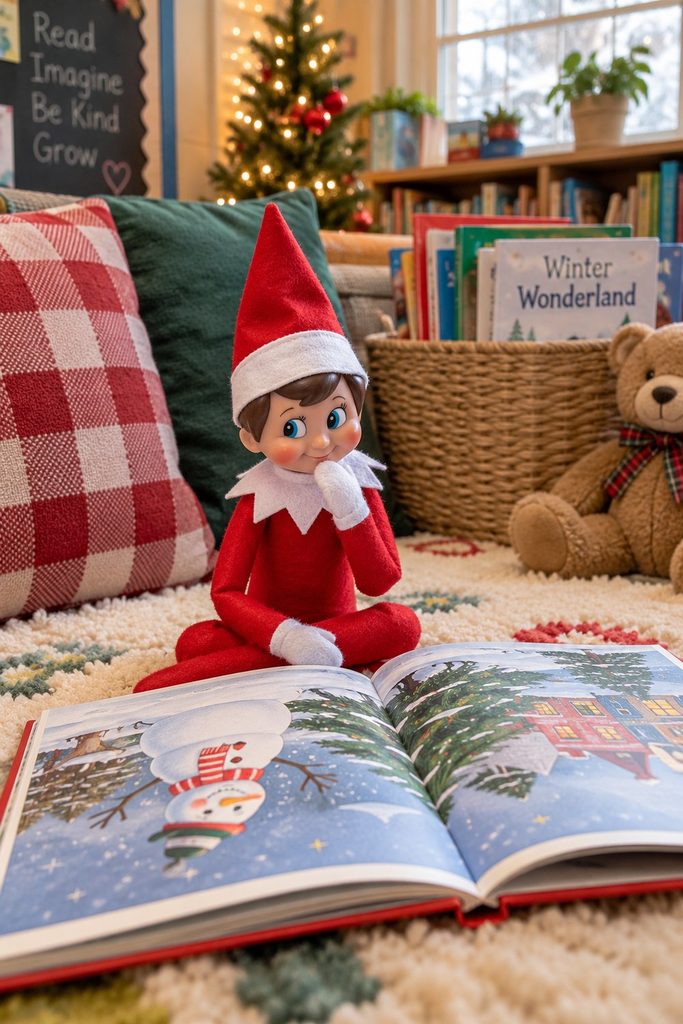
Prop your elf beside an upside-down book and leave a puzzled note:
“This story is harder to read than I expected.”
It’s a quick setup that works especially well near a reading corner. Ask students what advice they would give their mixed-up visitor.
13. A Tiny Desk for a Tiny Student
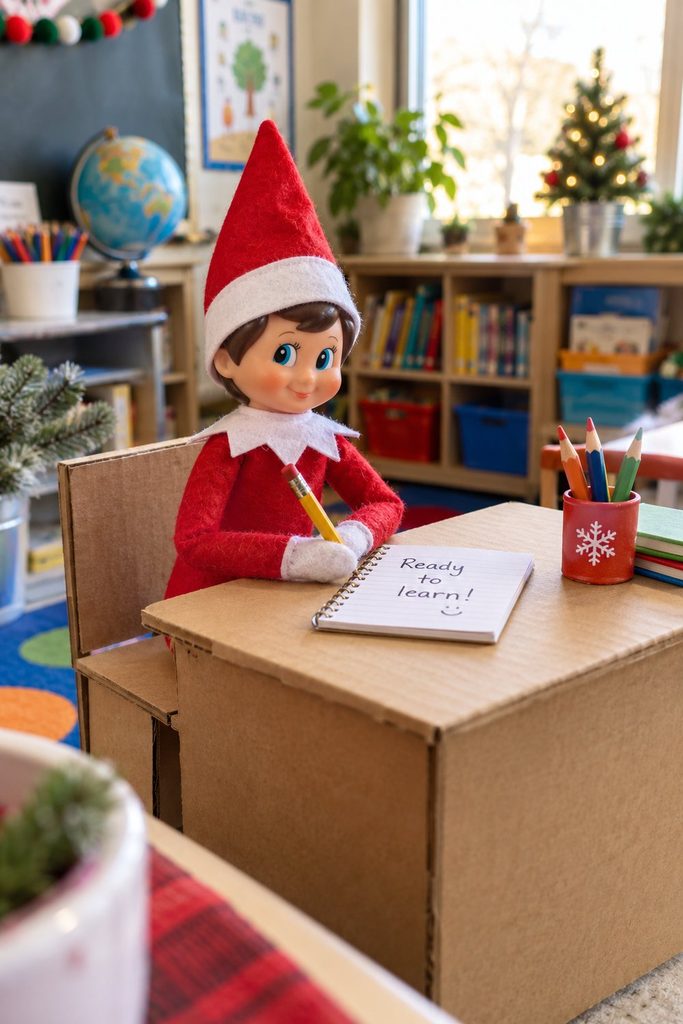
Use a small box as a desk and a folded piece of cardboard as a chair. Give the elf a little paper notebook.
Write “Ready to learn!” across the notebook.
Students can suggest what the elf should study first, from counting to writing its name.
14. Elf’s Joke of the Day
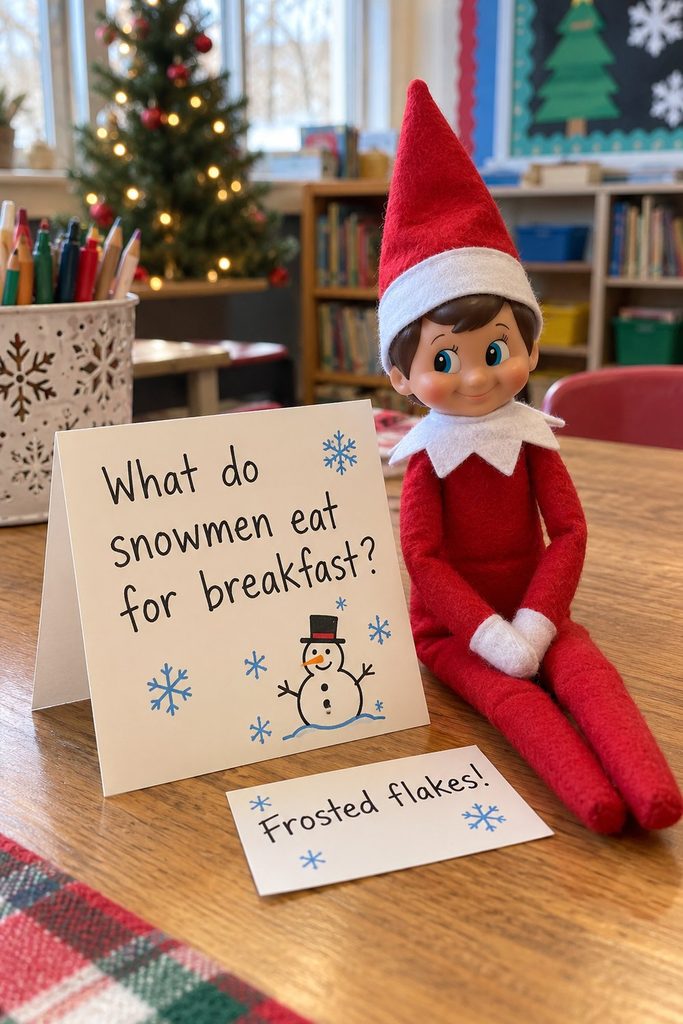
Sit the elf beside a folded card with a joke on the front and the answer inside.
Try this one:
What do snowmen eat for breakfast?
Frosted flakes!
Let students guess during morning meeting before revealing the answer.
15. A Mixed-Up Alphabet
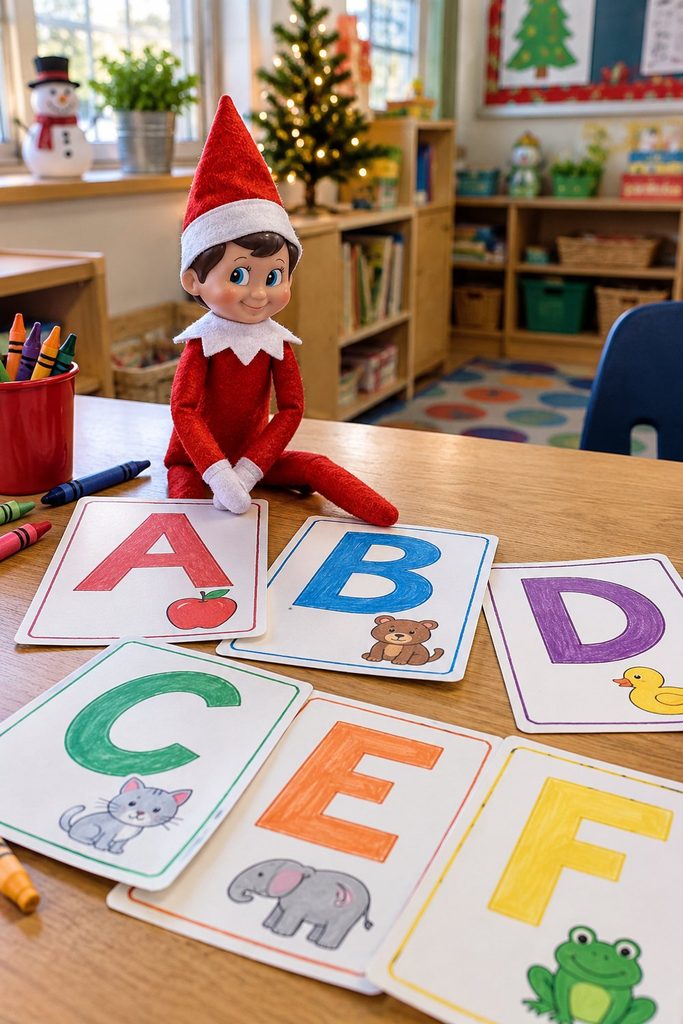
Arrange alphabet cards near your elf with a few letters out of order.
Leave a note: “Something doesn’t look quite right. Can you help?”
For older students, swap the alphabet for a scrambled vocabulary word or a sentence with mixed-up words.
16. Elf Visits the Calm Corner

Place your elf in the classroom’s calm corner with a small paper blanket and a card that says:
“Even elves need a quiet moment.”
Use the scene to introduce a brief breathing exercise or a conversation about ways to take a break when things feel busy.
17. A Sticky-Note Greeting

Arrange sticky notes into a simple smiley face on a board, with the elf sitting nearby.
Add a greeting such as “Happy Tuesday, curious thinkers!”
Keep the display small enough that cleanup takes seconds. There’s no need to cover every desk to make students smile.
18. Elf Measures Everything
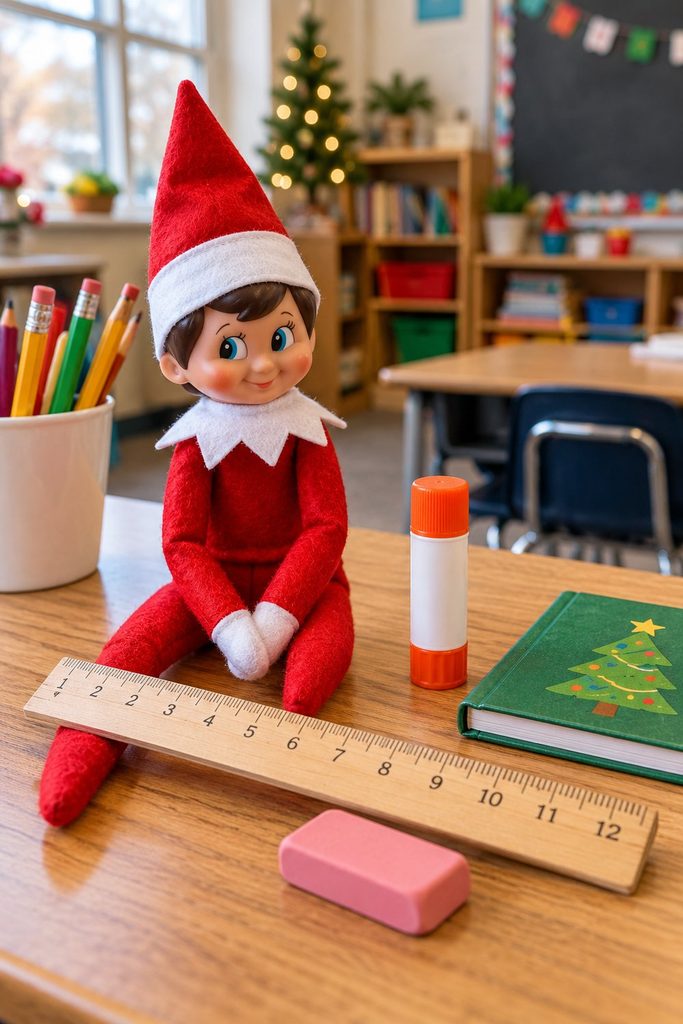
Set the elf beside a ruler and a few classroom objects, such as an eraser, glue stick, and book.
Leave a note: “How tall am I? How long is my book?”
Students can estimate first, then check the measurements. Younger learners can use linking cubes instead of standard units.
19. The Great Cup Tower

Stack a few paper cups into a small pyramid and place the elf beside it.
A sign reading “Future architect at work” adds the finishing touch.
Keep the tower low and on a stable surface. If time allows, students can plan their own cup structures during a building activity.
20. Elf’s Lost Mitten Mystery
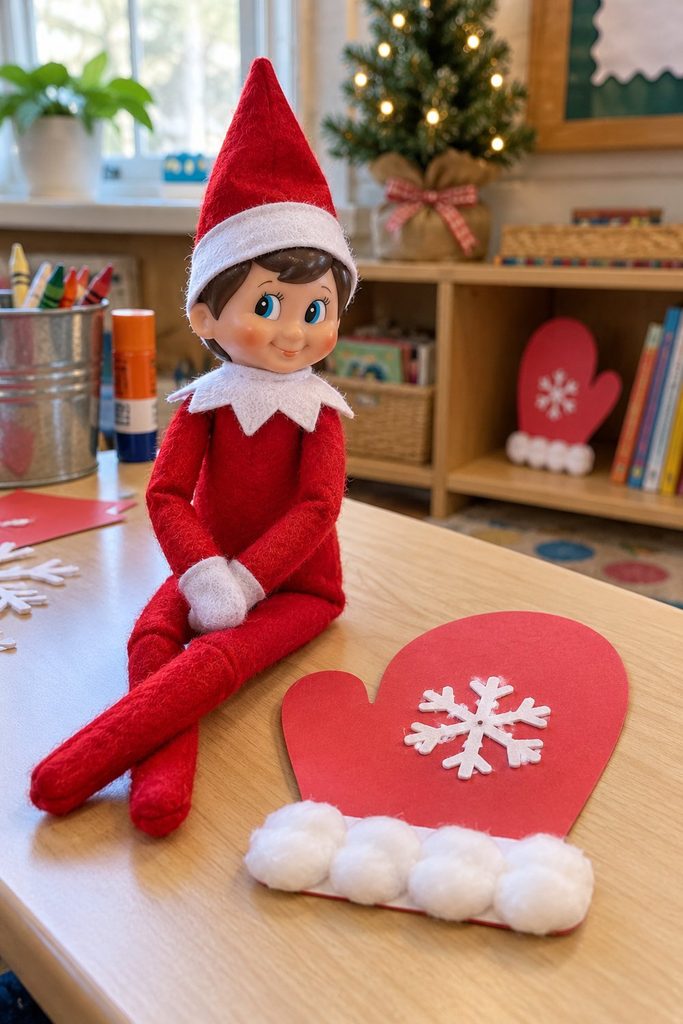
Cut a mitten shape from colored paper and place it beside the elf with a note:
“I found one mitten. Where could its match be?”
Hide the matching paper mitten somewhere visible and accessible. Set a clear search time so the mystery doesn’t interrupt the whole morning.
21. A Classroom Compliment Station
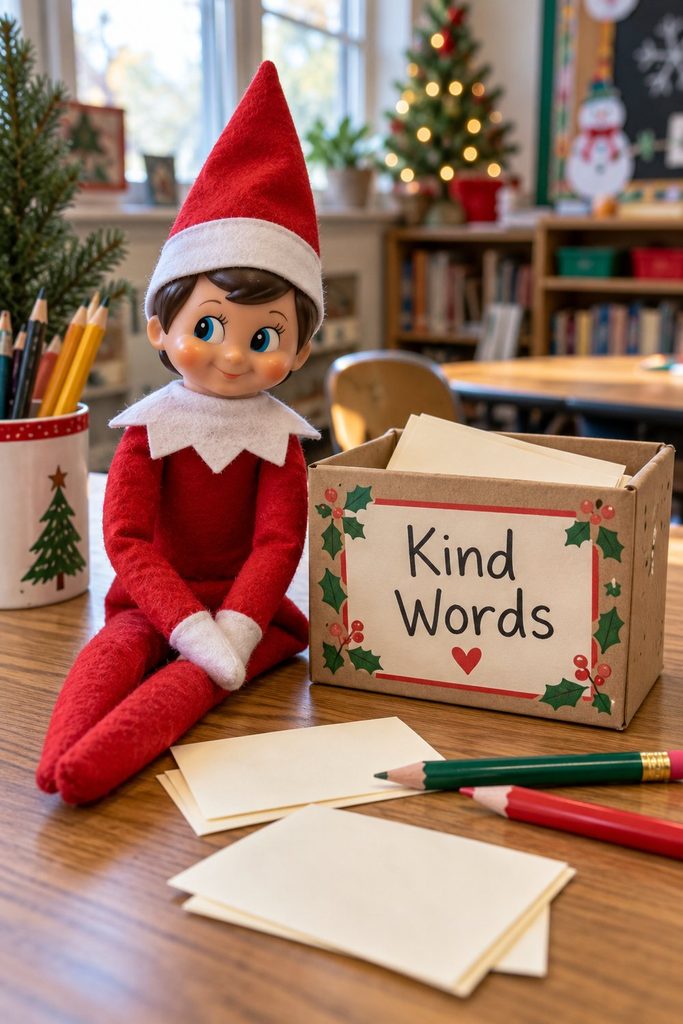
Sit the elf beside blank paper slips and a small box labeled “Kind Words.”
Leave a prompt: “Write or draw something you appreciate about someone in our classroom.”
Students can recognize classmates, classroom helpers, or the whole group. Read contributions before sharing them aloud.
22. Elf Tries a Morning Math Problem

Write a short math problem on a mini whiteboard and place the elf beside it.
For example:
“I packed 4 red mittens and 3 blue mittens. How many mittens did I pack?”
Choose a problem that matches your students’ level. The elf can even leave an incorrect answer for the class to discuss and fix.
23. A Paper-Chain Countdown

Have your elf sit beside a short paper chain counting down to winter break or a classroom celebration.
Add a note: “Let’s make these last school days count!”
You can write a quick class activity inside each link, such as sharing a favorite book or drawing a winter scene.
24. Elf Packs for Winter Break

Place the elf beside a tiny suitcase made from a folded piece of cardstock. Add a paper scarf, miniature book, and little packing list.
The note can say: “Almost ready for my next adventure!”
Ask students what they would pack for a snowy trip and why.
25. A Goodbye Note to the Class
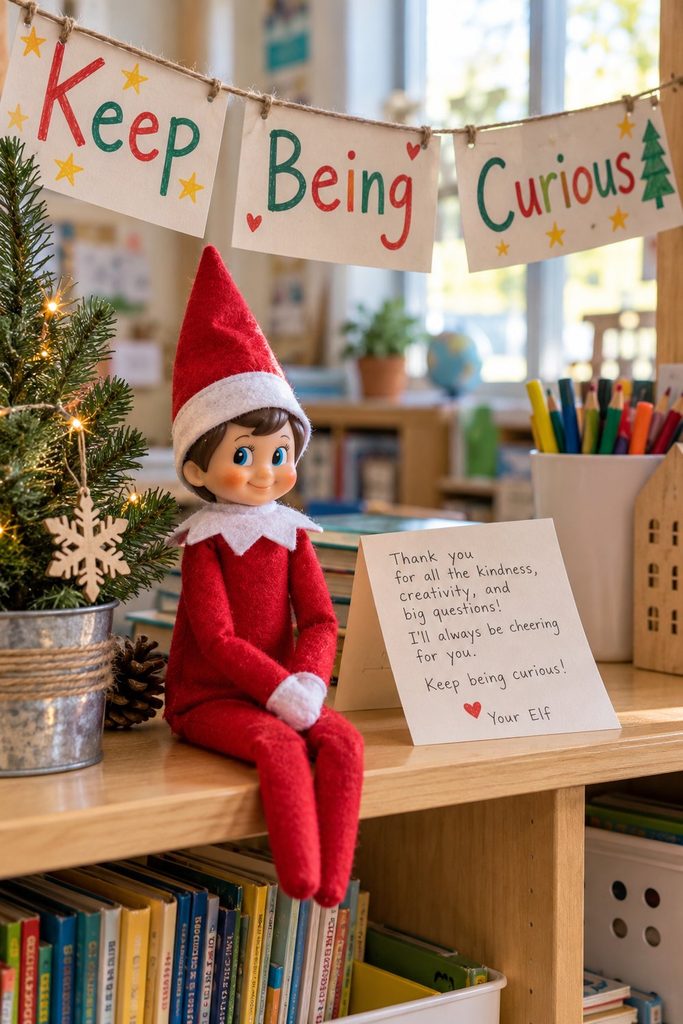
For the elf’s final visit, create a simple farewell scene with a paper banner that reads “Keep Being Curious.”
Leave a note celebrating shared experiences:
“Thank you for letting me visit your classroom! I loved the stories, creative ideas, and kind moments we shared. Keep asking questions and helping each other. Have a wonderful winter break!”
Invite students to draw or write about their favorite elf visit as a final activity.
Simple Tips for a Classroom Elf That Doesn’t Add Stress
A classroom elf should be fun for you, too. A little planning makes the tradition easier to manage.
- Use supplies you already have. Paper, books, blocks, cups, and sticky notes offer plenty of possibilities.
- Choose a consistent display spot. A shelf or small table lets students enjoy the scene without blocking classroom routines.
- Skip loose glitter and food-based setups. Paper props are easier to clean up and avoid food allergy concerns.
- Keep the elf friendly. Present it as a playful visitor rather than someone watching for mistakes or reporting behavior.
- Make participation optional. Frame the elf activities so children with different family traditions can enjoy the classroom creativity without needing to share a holiday belief.
- Repeat a favorite setup. Your elf can return to reading, drawing, or building whenever you need an easy day.
You don’t need an elaborate scene every morning. A tiny note, a familiar classroom prop, and a little silliness can be enough to give students something to look forward to.