
How to Host Christmas Dinner: A Simple, Stress-Free Guide
Quick Answer: Host Christmas dinner by choosing a realistic menu four weeks out, delegating specific tasks to guests, prepping freezer-friendly dishes ahead of time, and building a cooking timeline that works backward from your serving hour. Done well beats done perfectly.
There’s a particular kind of pressure that shows up every December: the pressure to host the kind of Christmas dinner you see in magazines, with a table that looks like it belongs in a holiday film and a meal that comes together without a single hitch.
Here’s the truth — hosting Christmas dinner well has almost nothing to do with fancy china or a five-course spread. It has everything to do with planning ahead, asking for help, and knowing exactly what to cook when.
Get those three things right, and the rest takes care of itself. Skip them, and even the simplest meal can feel like chaos by four o’clock.
This guide walks you through a five-step framework for hosting Christmas dinner with confidence — from choosing your menu weeks in advance to timing the oven so everything lands on the table hot, together, and without a last-minute scramble.
Heads up: This post may include affiliate links. As an Amazon Associate, I earn from qualifying purchases—at no extra cost to you. Full privacy policy and disclosure here.
Step 1: Choose Your Menu Four Weeks Out
Your menu decision is the single most important choice you’ll make, because everything else — your grocery list, your prep schedule, your cooking timeline — flows from it. Make this decision early, and the rest of hosting gets dramatically easier.
Pick Five or Six Dishes, Not Twelve
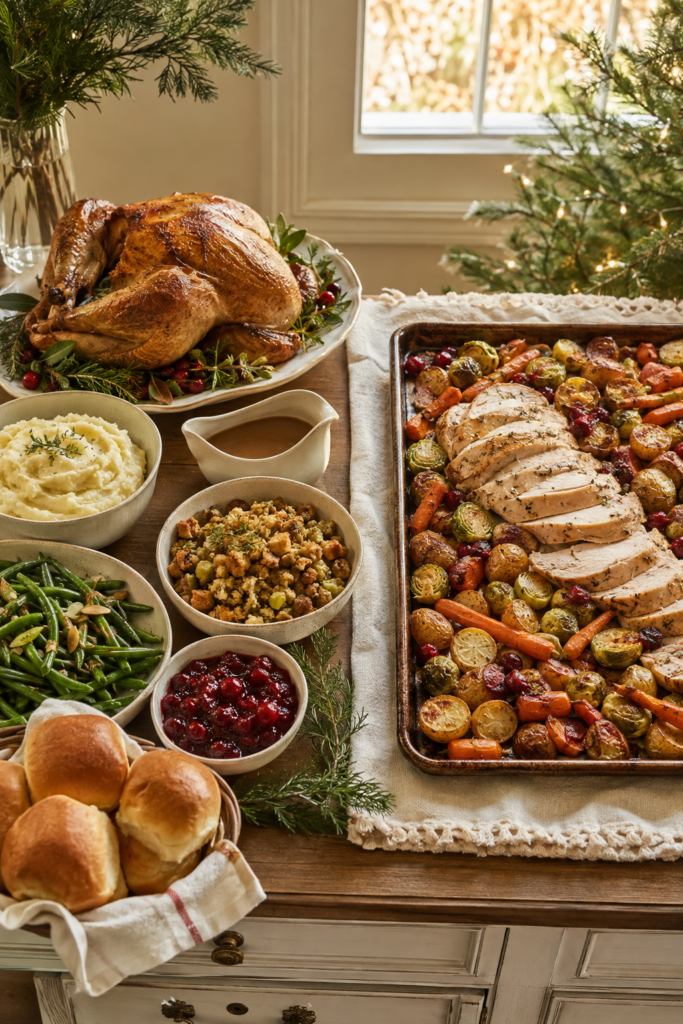
A sprawling, twelve-dish spread looks impressive on Pinterest and feels miserable to actually cook. Choose one protein, two or three sides, a bread, and a dessert. That’s a full, satisfying Christmas dinner — no one at your table is counting dishes.
Decide: Traditional or Simplified
Some years call for the full roast-and-trimmings experience. Other years call for something easier that still feels festive. Neither choice is wrong. What matters is picking one and building your timeline around it.
| Menu Style | Best For | Make-Ahead Potential |
|---|---|---|
| Traditional (turkey, stuffing, multiple sides) | Larger gatherings, family traditions | Moderate — sides can be prepped ahead |
| Simplified (ham or roast chicken, 2 sides, one bread) | Small gatherings, first-time hosts, low-stress years | High — most components freeze or prep well |
| Hybrid (one traditional centerpiece, simplified sides) | Hosts wanting tradition without the full workload | High |
Write It Down and Share It Early
Once you’ve settled on a menu, write it out and share it with anyone attending. This does two things: it locks in your plan so you stop second-guessing, and it opens the door for guests to offer to bring something.
Step 2: Delegate Before You’re Overwhelmed
Hosting doesn’t mean doing everything yourself. The best Christmas dinners are the ones where the work is spread across several sets of hands — you just have to ask. If several guests are bringing dishes, this list of last-minute potluck dishes is a handy one to send along so nobody shows up empty-handed or overthinking what to bring.
The Delegation Conversation
Vague requests get vague results. Instead of “let me know if you can help,” try something specific: “Could you bring the dessert?” or “Would you mind arriving thirty minutes early to help with the table?” Specific asks are easy to say yes to.
A Simple Task Assignment System
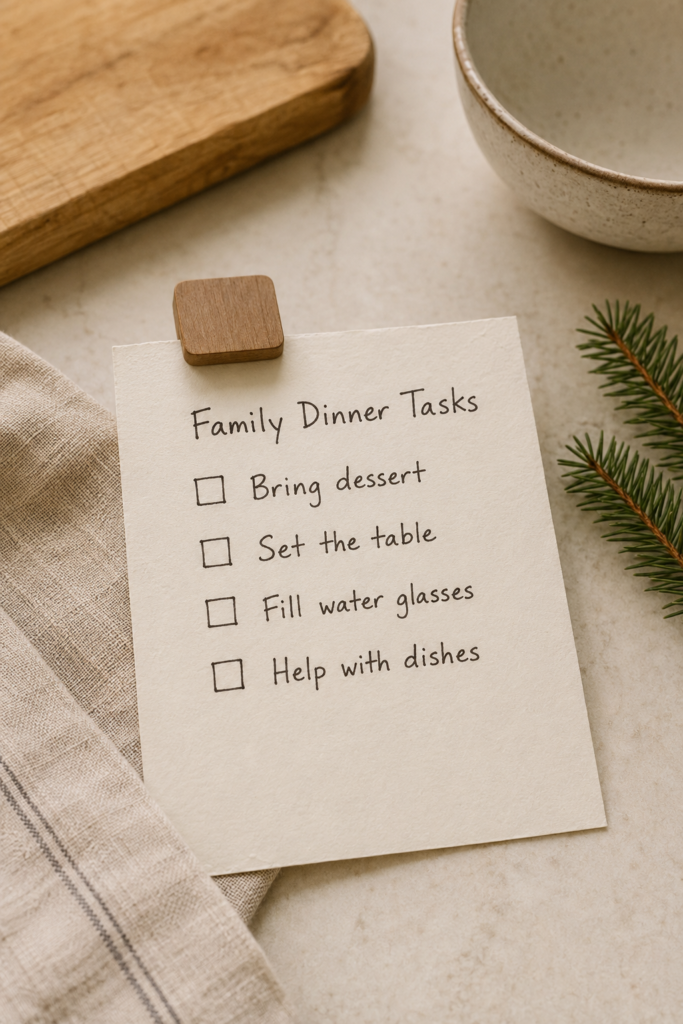
- The early arriver: Someone who comes 30–45 minutes ahead to help with table setup or last-minute prep.
- The dish bringer: One or two guests bring a side dish or dessert — pick something that travels well.
- The kid wrangler: A relative who keeps the kids occupied while the kitchen is in full swing.
- The cleanup crew: Assign this before dinner starts, not after — it makes a huge difference in how the evening winds down.
Step 3: Follow a Week-by-Week Prep Timeline
Most Christmas dinner stress comes from cramming everything into a single day. Spread the work across several weeks instead, and the day itself feels almost easy.
| Timeline | What to Do |
|---|---|
| 4 weeks before | Finalize menu, guest list, and send invites |
| 3 weeks before | Build your grocery list and set a budget |
| 2 weeks before | Deep clean the main living and dining spaces |
| 1 week before | Prep and freeze make-ahead dishes; tidy the house |
| 3 days before | Final grocery shop and batch prep (chopping, marinating) |
| Day before | Vegetable prep, table setup, final kitchen organization |
| Morning of | Final touches and a timing check against your cooking schedule |
Step 4: Prep-Ahead Dishes That Actually Work
The freezer is one of the most underused tools in holiday hosting. Several classic Christmas dishes hold up beautifully when made in advance and reheated on the day.
Sides That Freeze Well
- Mashed potatoes: Freeze in a covered dish; reheat with a splash of cream or milk to restore texture.
- Green bean casserole: Assemble fully, freeze unbaked, and bake straight from frozen with extra time.
- Stuffing: Prep and freeze before baking; thaw overnight in the fridge.
- Cranberry sauce: Freezes and reheats with almost no quality loss.
Desserts That Freeze Beautifully
Pies, cheesecakes, and most cookies freeze well. Bake them a week or two ahead, wrap tightly, and thaw on the counter the morning of.
What Not to Freeze
Fresh salads, delicate herbs, and anything meant to be crisp — like roasted vegetables — are best made close to serving time. Freezing changes their texture in ways that are hard to fix.
Step 5: Master the Cooking Timeline
This is the step that turns hosting from stressful to smooth. A good timeline works backward from your serving hour, so every dish finishes hot and at the same time.
Calculate Backward From Dinner Time
- Set your serving time: Decide the exact hour you want food on the table.
- List each dish’s cook time: Note how long each item needs, including resting time for meat.
- Work backward: Starting from your serving time, subtract each dish’s cook time to find its start time.
- Stagger by oven space: If two dishes need the oven at once, adjust temperatures or shift one to the stovetop. A few crockpot Christmas appetizers are a good way to take pressure off the oven entirely while the mains cook.
The Three-Hour Window Rule
Most Christmas dinners come together within a three-hour active cooking window, once make-ahead prep is done. If your timeline stretches much beyond that, look for more dishes to prep in advance.
Set Up Your Kitchen Like a Pro
A little organization goes a long way once the cooking starts. You don’t need a professional setup — just a system that keeps you from losing your favorite spatula in a pile of mixing bowls.
A Simple Station Layout
- Prep station: Cutting boards, knives, and bowls within reach of your workspace.
- Garbage and compost station: A bowl or bag nearby to catch scraps without extra trips to the bin.
- Drink station: Set up self-serve so guests aren’t asking you for refills mid-cook.
- Backup dish and towel station: Extra towels and space for dirty dishes so the sink doesn’t back up during prep.
Hosting With Kids Underfoot
If little ones are part of your celebration, the kitchen chaos multiplies. That’s normal — and there are ways to make it work without needing eyes on the back of your head.
Keep Cooking Boundaries Clear
A simple “the stove area is off-limits” rule, said early and consistently, prevents most kitchen close calls.
Give Kids Something to Do Nearby
A coloring station at the kitchen table, a favorite show in the next room, or a simple task like folding napkins keeps kids engaged without needing constant supervision.
Involve Older Kids Productively
Older children can set the table, stir a pot under supervision, or help greet guests at the door — small jobs that make them feel included in the day.
The “Done” vs. “Perfect” Mindset Shift
Here’s something worth remembering before the day arrives: your guests aren’t grading your napkin folds. They’re there for the company, the food, and the feeling of being welcomed.
What Actually Matters to Your Guests
A warm greeting, good food, and a relaxed host matter far more than a flawless centerpiece. Save your energy for the things people will actually remember.
Table Setting Shortcuts That Still Look Intentional
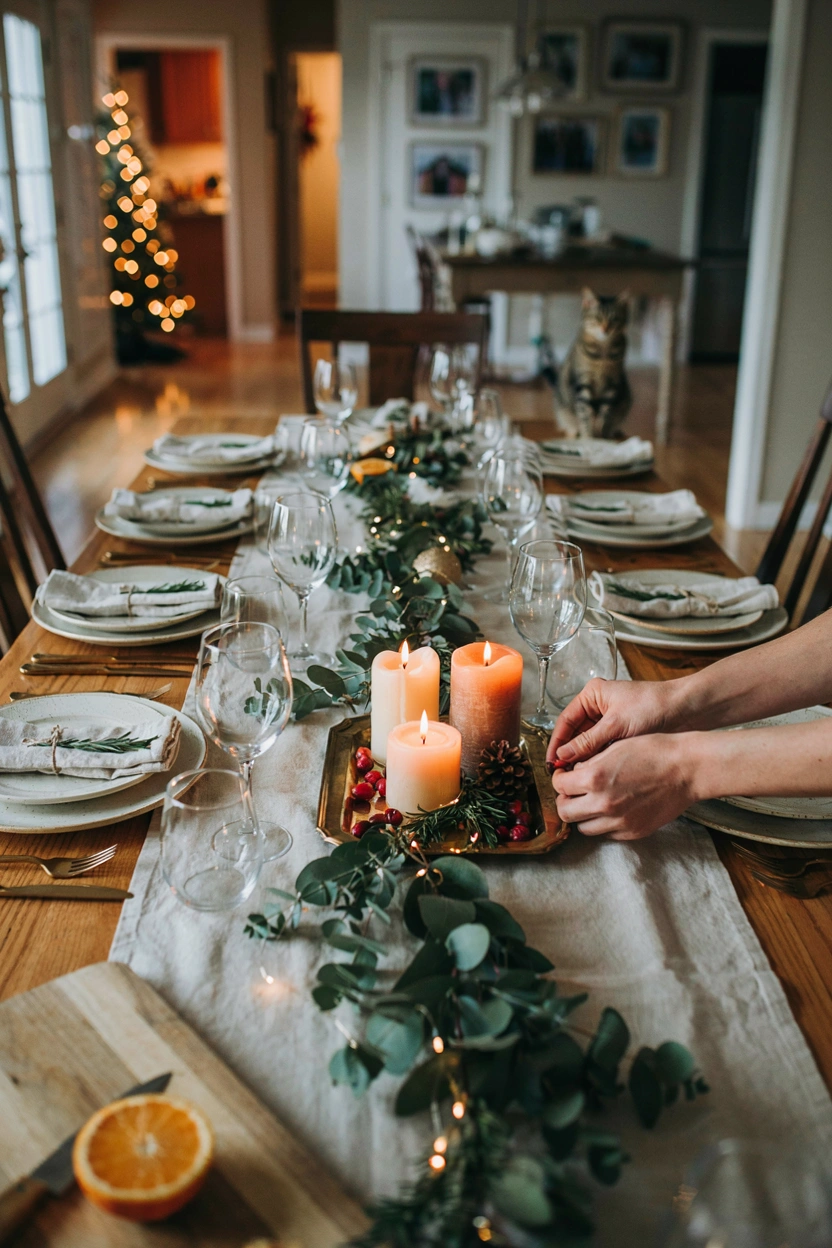
- A single runner of greenery or a few candles creates instant ambiance without much effort.
- Mismatched but coordinated plates read as charming, not chaotic.
- A simple name card at each place setting makes the table feel thoughtful in minutes.
Let the house be lived-in. A candle burning and a fire crackling will do more for the atmosphere than a spotless floor ever will. For more ideas on pulling the table together without overthinking it, this guide to Christmas tablescape ideas has simple, low-effort styling that still looks intentional.
Frequently Asked Questions
How far in advance should I plan Christmas dinner?
Start planning your menu and guest list about four weeks out. Shop two weeks before, and handle your active prep and cooking in the final three to five days.
What’s an easy Christmas dinner menu that doesn’t require fancy cooking?
A roasted turkey or ham, buttered mashed potatoes, one green vegetable, dinner rolls, cranberry sauce, and a simple dessert covers every base without demanding advanced technique.
How do I ask family to help without feeling guilty?
Make the ask specific: “Can you bring dessert?” or “Can you come thirty minutes early to help set the table?” Specific requests are far easier for people to say yes to than vague ones.
Can I cook everything ahead and just reheat on the day?
Many dishes — mashed potatoes, casseroles, stuffing, desserts — reheat beautifully. Fresh items like salads and roasted vegetables are better made close to serving time.
What if a guest has a dietary restriction I didn’t know about?
Ask about dietary needs when you send invitations, not the week of. If something comes up last minute, a simple side dish swap usually solves it without derailing your whole menu.
How much food should I actually prepare?
A general rule is about one pound of food per person across all dishes combined, factoring in that sides typically get eaten more heavily than the main.
What if my oven isn’t big enough for everything?
Stagger your cooking timeline so items go in sequentially, and lean on stovetop, slow cooker, or make-ahead dishes to take pressure off the oven.
Should I use fancy plates or keep it simple with paper?
Whatever reduces your stress is the right choice. Quality disposable dinnerware has come a long way and can look just as festive as china, with far less cleanup.
What time should I actually serve dinner?
Early-to-mid afternoon (1–3 PM) works well for family gatherings with kids, giving everyone a full evening afterward. Evening dinners suit adult-only or smaller gatherings.
How do I handle cleanup without it eating into the rest of the day?
Assign a cleanup crew before dinner starts, use disposable liners in serving dishes where possible, and don’t feel obligated to fully clean the kitchen before dessert.
Is it okay to use frozen vegetables or store-bought sides?
Absolutely. A store-bought pie or frozen vegetable side frees up time and energy for the dishes that matter most to you, and no guest will mind.
What do I do if I’m hosting for the first time?
Start smaller than you think you need to. A simplified menu with five or six dishes, one or two delegated tasks, and a clear timeline will carry you through a successful first year of hosting.
Key Takeaways
- Lock in your menu four weeks ahead — it’s the decision everything else depends on.
- Delegate specific tasks to guests instead of trying to do it all yourself.
- Lean on the freezer for sides and desserts to lighten the day-of workload.
- Build a cooking timeline backward from your serving hour to avoid oven traffic jams.
- Remember that a warm, relaxed host matters more to guests than a picture-perfect table.
Your Christmas Dinner Is Going to Be Wonderful
Hosting Christmas dinner isn’t about achieving perfection — it’s about creating a warm, welcoming space where the people you love feel at home. When you plan ahead, ask for help, and let go of the small stuff, the day comes together far more easily than you might expect.
You don’t need a flawless table or a twelve-dish spread to host well. You just need a plan — and now you have one.
Pick your menu this week, send that group text asking who’s bringing dessert, and start building your timeline. This year’s Christmas dinner is already in good hands.
You might also love:


2 Comments